Saturday, February 28, 2009
Substance Abuse and Mental Illness
Did you know addiction and mental illness facilitate each other? There is research that indicates addiction to drugs or alcohol can lead to mental illness and likewise, mental illness can lead to substance abuse. We know drug and alcohol addiction are bad for our brain. We have all seen the infamous commercial of an egg- "This is your brain"- and the egg frying in a pan: "This is your brain on drugs." We have all seen movies where an individual high on either methamphetamine or heroin portray schizophrenic behavior. However, did you know that someone suffering from a mental illness is more likely to abuse drugs and alcohol? Within mass media, alcohol is portrayed as a companion to a disappointed, lovesick person. Have you ever heard the phrase, "drowning your woes with alcohol?" Well, this exact behavior is called self-medication. Self-medication is the use of drugs or alcohol to relieve oneself of distress or pain. The dependence of a substance to alleviate a mental condition, can then lead to addiction- thus causing a dual diagnosis. A dual diagnosis is one where a person is suffering from mental illness and addiction to a substance. Treatment for dual diagnosis is more complicated since the individual would need to go through a detoxification period, rehabilitation, and then undergo treatment for the mental illness. For more information click here to go to the MedlinePlus website on dual diagnosis: http://www.nlm.nih.gov/medlineplus/dualdiagnosis.html

Wednesday, February 18, 2009
Mental Illness: Genetics vs Environment
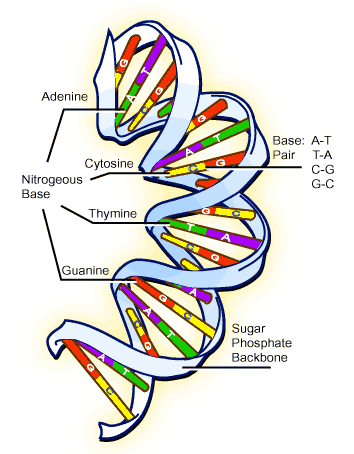
Is one's mental health determined by their genetic structure or their environment? The truth is that both factors are important components to mental health. Causes of certain mental illnesses continue to be debated as whether they are genetic or environmental. Autism is one such case. A recent court decision found that vaccines do not cause autism, disappointing thousands of parents who truly believed that the MMR vaccine administered on their children led to this condition. These parents believed that a specific environmental factor caused autism in their children, however the court ruled that a vaccine was not the culprit.
Post Traumatic Stress Disorder is a mental illness that acknowledges environmental causes. Depression is known to have genetic predisposition, as well as environmental triggers. The Environmental Health Perspectives journal has a great article on the environmental connection to mental illness (click on purple text to read it.) Linking environmental factors as underlying causes of mental illnesses would increase greater prevention and treatment strategies by targeting these causes.

The importance of environment and overall health and wellness has been increasing among health professionals. A healthy environment leads to healthy people and unhealthy environment leads to unhealthy people. The greater incidence of mental illness in current society has led many to see important connections between environment and mental health. This growing importance of healthy environments has helped many to view mental health as a community/societal issue, not solely an individual issue. Tackling mental health as a society will help to destimatize mental illness and bring awareness for treament on multiple levels- environmentally and individually.
Thursday, February 12, 2009
What is Mental Health?
Mental Health, at times, appears to be an elusive topic. Dictionary.com provides various definitions of mental health such as :
-psychological well-being and satisfactory adjustment to society and to the ordinary demands of life (Random House Dictionary,)
-A person's overall emotional and psychological condition (American Heritage Dictionary,) and
-the condition of being sound mentally and emotionally that is characterized by the absence of mental disorder (as neurosis orpsychosis) and by adequate adjustment especially as reflected in feeling comfortable about oneself, positive feelings about others, and ability to meet the demands of life (Merriam Webster Medical Dictionary.)
These definitions then add more questions: How does one measure psychological well-being, overall emotional condition, or adequate adjustment? Professionals, in this field, logically have a range of tools and tests to gauge one's mental and emotional condition. However, many do not have the ability to access professionals, and at times base mental health in terms of happiness.
Happiness, as well, being an elusive term. In this way, many people suffer with mental health conditions that they themselves don't understand and much less know that there is treatment.
The National Institute for Mental Health website (www.nostigma.org ) state that 57.7 million adults suffer from a diagnosable mental health disorder each year. In young people, 1 out of every 5 have a diagnosable mental health condition. They also state that 66% of young people with substance abuse issues also have a co-occurring mental health disorder.
What exactly is a mental health disorder? Mental Health disorders range from depression, schizophrenia, eating disorders, anxiety disorders ( phobias, post-traumatic stress disorder, obsessive-compulsive disorder), to attention deficit hyperactivity disorder. At times, symptoms are very visible, such as in prominent cases of schizophrenia, however, many times symptoms are difficult to decipher leading many people suffering with a mental health disorder to feel helpless- or worse, cause them to harm themselves or others.
View a video on mental illness stigma by clicking here: Stigma.
Lately, our national news outlets have focused on various cases linked to the individuals mental health. Last Christmas, we all heard about the case of Bruce Pardo- a gunman dressed as Santa Claus who massacred 9 people at his ex-wife's West Covina party. Pardo was described as having "snapped" after his divorce. A couple weeks ago, we all heard of an LA man who killed his children and wife, after they both lost their jobs. Currently, we are all bombarded with the case of a single mother who has birthed 14 children through insemination. Many news commentators are filling up media space questioning the mother's mental health and her ability to successfully raise her children.
These cases may be extreme examples of mental health cases, however, it is exactly these stories that detach individuals to mental health disorders. These extreme cases could led one to think that a mental health disorder is the same thing as being crazy, but this is not true. Disorders range from mild to severe symptoms. Ignoring the symptoms, however, can worsen a disorder. It is important to know that there is treatment for mental health disorders.
Mental Health is a highly stigmatized field in public health. Many people who suffer from a mental health disorder do so in silence and, at times, self-medicated with alcohol or drugs. It is important to discuss mental health disorders and symptoms, in order to put a face on this elusive term.
-psychological well-being and satisfactory adjustment to society and to the ordinary demands of life (Random House Dictionary,)
-A person's overall emotional and psychological condition (American Heritage Dictionary,) and
-the condition of being sound mentally and emotionally that is characterized by the absence of mental disorder (as neurosis orpsychosis) and by adequate adjustment especially as reflected in feeling comfortable about oneself, positive feelings about others, and ability to meet the demands of life (Merriam Webster Medical Dictionary.)
These definitions then add more questions: How does one measure psychological well-being, overall emotional condition, or adequate adjustment? Professionals, in this field, logically have a range of tools and tests to gauge one's mental and emotional condition. However, many do not have the ability to access professionals, and at times base mental health in terms of happiness.
Happiness, as well, being an elusive term. In this way, many people suffer with mental health conditions that they themselves don't understand and much less know that there is treatment.
The National Institute for Mental Health website (www.nostigma.org ) state that 57.7 million adults suffer from a diagnosable mental health disorder each year. In young people, 1 out of every 5 have a diagnosable mental health condition. They also state that 66% of young people with substance abuse issues also have a co-occurring mental health disorder.
What exactly is a mental health disorder? Mental Health disorders range from depression, schizophrenia, eating disorders, anxiety disorders ( phobias, post-traumatic stress disorder, obsessive-compulsive disorder), to attention deficit hyperactivity disorder. At times, symptoms are very visible, such as in prominent cases of schizophrenia, however, many times symptoms are difficult to decipher leading many people suffering with a mental health disorder to feel helpless- or worse, cause them to harm themselves or others.
View a video on mental illness stigma by clicking here: Stigma.
Lately, our national news outlets have focused on various cases linked to the individuals mental health. Last Christmas, we all heard about the case of Bruce Pardo- a gunman dressed as Santa Claus who massacred 9 people at his ex-wife's West Covina party. Pardo was described as having "snapped" after his divorce. A couple weeks ago, we all heard of an LA man who killed his children and wife, after they both lost their jobs. Currently, we are all bombarded with the case of a single mother who has birthed 14 children through insemination. Many news commentators are filling up media space questioning the mother's mental health and her ability to successfully raise her children.
These cases may be extreme examples of mental health cases, however, it is exactly these stories that detach individuals to mental health disorders. These extreme cases could led one to think that a mental health disorder is the same thing as being crazy, but this is not true. Disorders range from mild to severe symptoms. Ignoring the symptoms, however, can worsen a disorder. It is important to know that there is treatment for mental health disorders.
Mental Health is a highly stigmatized field in public health. Many people who suffer from a mental health disorder do so in silence and, at times, self-medicated with alcohol or drugs. It is important to discuss mental health disorders and symptoms, in order to put a face on this elusive term.
Subscribe to:
Posts (Atom)


